

From Data to Results: DEXA Scanning Explained

Cameron Hyde • July 9, 2026
From Data to Results: DEXA Scanning Explained | Progressive Sports Medicine
PROGRESSIVE SPORTS MEDICINE From Data to Results: DEXA Scanning Explained Book a Scan
Progressive Longevity Series

From Data to Results: DEXA Scanning Explained

Why body composition data, rather than the bathroom scales, is the clarity you can actually train from, and how we measure it and explain it at Progressive Sports Medicine.


~5 min read
01

Stop guessing, start progressing

If you have been training consistently but not seeing the results you expected, or you are simply tired of guessing whether your plan is actually working, it might be time to level up how you track progress. A DEXA scan gives you accurate data, grounded in science, to help guide your training, nutrition, and long term health decisions.

At Progressive Sports Medicine , we use DEXA body composition scanning to give you clinical grade insight into what is really happening inside your body, including fat, muscle, bone, and more. Whether your goal is performance, fat loss, or injury rehab, this scan gives you the kind of clarity you can actually act on.

02

What you get from a DEXA scan

Unlike bathroom scales or body fat calculators, a DEXA scan breaks your body down with precision and provides detailed insights like these.

  • Total body fat percentage the most accurate reading of how much fat you are carrying.
  • Visceral fat mass the fat stored around your organs, linked to metabolic risk.
  • Lean muscle mass total lean mass and where it is distributed across arms, legs, and trunk.
  • Muscle symmetry a left versus right limb comparison to identify imbalances.
  • Bone mineral density (BMD) early insight into osteoporosis or bone health risks.
  • Regional body composition a detailed breakdown by body segment, such as how much muscle sits in your left leg versus your right.
  • Changes over time your progress tracked across multiple scans.
The seven things a DEXA scan measures: total body fat percentage, visceral fat mass, lean muscle mass, muscle symmetry, bone mineral density, regional body composition, and changes over time

This is real data that helps you make smarter training, nutrition, and rehab decisions.

03

Why it matters: a real example

Let us say you have been training hard and gained 4kg. Without proper data, it is hard to know if that is muscle or fat. One of my clients, Alex, came in after six months of training. His DEXA scan showed the following.

ALEX · SIX MONTH RESULT

+2.1kg lean muscle , mostly in his quads and glutes
+1.7kg fat
Stable bone density
Alex six month DEXA result: plus 2.1kg lean muscle mostly in the quads and glutes, plus 1.7kg fat, and stable bone density, with the interpretation that training was working and nutrition needed adjusting

This told us two things: his training was doing what it should, but we needed to adjust his nutrition to reduce fat gain. With that kind of detail, he could stay focused, confident he was building real strength in the right areas.

04

How often should you get a DEXA scan

Here is what I generally recommend.

8 to 12 weeks

During structured training or fat loss.

6 to 12 months

For general health, bone density, or injury rehab.

Start and end

Of a program, to measure baseline and outcomes.

Recommended DEXA scan cadence: every 8 to 12 weeks during structured training or fat loss phases, every 6 to 12 months for general health, bone density or injury rehab monitoring, and at the start and end of a programme to measure baseline and outcomes
05

Why clients choose Progressive Sports Medicine

At Progressive Sports Medicine, you are not just handed a report and sent on your way. Our exercise physiologists and sports physicians walk you through the data in detail and help you make sense of what it actually means for your training and recovery. You will get:

  • A full digital report .
  • A one to one explanation from your Exercise Physiologist or a Sports Physician.
  • Tailored recommendations you can act on straight away.

Whether you are chasing a performance edge, recovering from injury, or simply want to train smarter, this is your baseline for change.

Because when you know better, you train better.
Specialist Led · Leichhardt, Sydney

Book your DEXA scan. Then train from data, not guesswork.

A DEXA body composition scan gives you a full digital report and a personal walk through, so every training and nutrition decision is grounded in what is really happening inside your body.

Call the clinic

(02) 8540 8019
Tue to Fri, 8:30am to 6:00pm

Email us

office@drdavidsamra.com.au
General enquiries and referrals

PROFESSIONAL AND PATIENT NOTICE

The information presented here is intended for general education and professional discussion only. It is not a substitute for individual medical advice, diagnosis, or treatment. Speak with your GP or a specialist before making changes to your exercise or health care.

~5 min left
READING PROGRESS
Add your custom HTML here

July 10, 2026
By David Samra May 29, 2026
By David Samra May 17, 2026
Clinical Summary from Dr David Samra Dr David Samra is a Fellowship-trained Sport and Exercise Medicine Physician with clinical experience focused on prevention of cardiovascular disease in both athletes and the general population. Atherosclerotic cardiovascular disease (ASCVD) remains the dominant limiter of lifespan and healthspan in Western populations. Across epidemiology, guidelines, and mechanistic biology, the data converges on the same point: cardiovascular events are late expressions of a disease process that begins decades earlier and accumulates silently. The clinical implication is significant. If we keep using risk tools designed to predict 10-year events, we will continue to miss disease that has been building for 30 years. This article works through the biology, the evidence, and the clinical framework that has shaped my approach at Progressive Longevity Clinic. Last reviewed: May 2026 Author: Dr David Samra, MBBS (Hons), MD, FACSEP – Sport and Exercise Medicine Physician
By Cameron Hyde July 24, 2025
Why Strength Training is Essential for Building Stronger Bones If you think lifting weights is only for building muscle, think again. Strength training is one of the most effective tools we have to improve bone health, reduce fracture risk, and enhance overall function — especially as we age. At Progressive Sports Medicine, we integrate research-backed strategies like resistance training to help clients maintain bone density and prevent the cascade of issues associated with osteoporosis. The Problem: Bone Loss and Fracture Risk After age 30, we naturally begin to lose bone mass. For many, this can lead to osteopenia, osteoporosis, and an increased risk of fractures — especially in the spine, hip, and wrist. Fractures aren’t just painful. They lead to reduced mobility, independence, and even increased mortality in older adults. The Solution: Strength Training for Skeletal Health Emerging research and clinical consensus show that progressive resistance training (PRT) can directly improve bone health. But it’s more than just building density — it improves muscle mass, strength, posture, balance, and coordination , all of which reduce fall and fracture risk. Take a look at the insights from the latest data: 📊 What the Research Shows 1. Bone Drugs vs Exercise Medications like romosozumab and abaloparatide show impressive gains in lumbar spine BMD (10–13%) and fracture risk reduction (~50–70%). Exercise , while showing smaller increases in BMD (~1–2%), significantly reduces fracture risk (~35–40%) , likely due to improvements in strength, coordination, and fall prevention. Bottom line: Medications build bone density. Exercise prevents the fall in the first place. 2. How Exercise Works Strength training improves: ✅ Muscle strength and mobility ✅ Balance and gait ✅ Bone geometry and loading ✅ Pain and postural alignment These benefits lead to a cascade of fall risk reduction , addressing multiple contributors to fracture — not just low BMD. 3. Site-Specific Gains A controlled study found significant increases in cortical thickness of the femoral neck with exercise: 💪 17–30% increases in cortical bone thickness (critical for fracture prevention) ❌ No benefit in control group Even without large changes in total vBMD, improvements in bone structure translate into stronger bones. Why We Focus on Strength at Progressive Sports Medicine Most people assume calcium or walking is enough. It’s not. We prescribe tailored programs including: Resistance training (2–3x/week) Functional loading (step-ups, squats, deadlifts) Balance and reactive control work High-impact loading (where safe and appropriate) These not only stimulate bone but also train the nervous system to prevent falls — a key factor medications can’t address. Final Thoughts: It's Not Just About Density Bone health is about reducing fracture risk , and strength training addresses this from every angle — muscular, structural, and neurological. Whether you're managing osteopenia, rehabbing a fracture, or just want to age stronger — don’t skip the strength work . If you're ready to improve your bone health, book a consult and we'll show you how to build a program based on evidence, not guesswork .
By Cameron Hyde July 24, 2025
Blood Flow Restriction Training for Knee Injury Management: A Game-Changer in Rehab
By Cameron Hyde June 24, 2025
Blood Flow Restriction (BFR) Training: A Game Changer in Strength, Rehab, and Recovery
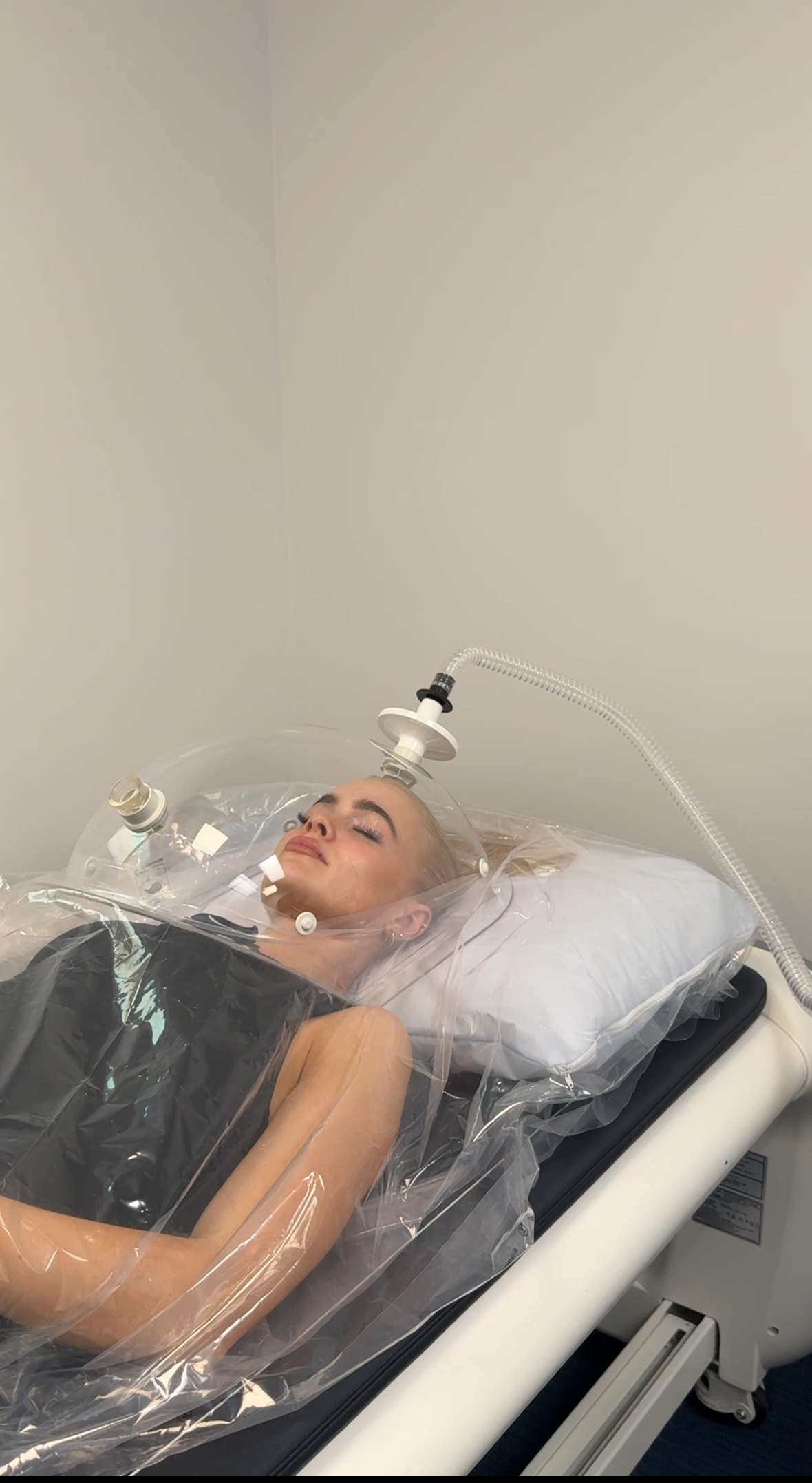
A woman is laying in a plastic bag on a bed.
By Cameron Hyde April 23, 2025
RMR Testing Explained
More Posts