


Joint Health • Progressive Sports Medicine
Osteoarthritis
Over 2 million Australians live with osteoarthritis. There is no cure, but it is far more treatable than most people are told, and the strongest treatments are not found in an operating theatre. Dr Samra contributed to the national Clinical Care Standard that defines best-practice osteoarthritis care in Australia.
Introduction
What is arthritis, and what is osteoarthritis?
Arthritis, meaning inflammation of the joints, causes pain, stiffness and disability and is very common. It affects both adults and children and can cause chronic pain. Most commonly we are referring to osteoarthritis, because it is by far the most common form of arthritis, affecting well over 10% of the population and increasing with age.
We often think of osteoarthritis as “wear and tear” of cartilage. However, osteoarthritis is also an inflammatory problem, and there are strong links between higher levels of arthritic pain, poor metabolic health and weight gain. If you have been told you have “wear and tear”, “degeneration” or “cartilage damage”, you have probably got a degree of arthritis.

 Watch: Dr Samra’s short lecture on osteoarthritis ▶ Watch on YouTube
Over 2 million Australians live with osteoarthritis, and the estimated cost in direct medical bills, early retirement and loss of productivity is over $5.5 billion per year. Too often, people with wear and tear of their joints are told to unnecessarily avoid the activities they enjoy, or are sent for unnecessary surgery, when the evidence tells us there are many other options.
The joint
Understanding what a joint needs
A joint is situated where two bones meet. Joints allow movement and flexibility of various parts of the body. The movement of the bones is caused by muscles, which pull on tendons that are attached to the bone. Cartilage covers the ends of the bones, and between the cartilage of two bones that form a joint there is a small amount of thick fluid called synovial fluid, which lubricates the joint.

Joints require smooth cartilage surfaces and good quality joint fluid to do their job of gliding smoothly without resistance. Unfortunately, neither of those things lasts forever, but it is very important to realise that the human body can often cope extremely well with imperfection. Cartilage on a scan does not feel pain; a whole person does, and the joint’s environment (the strength of the muscles around it, the load it carries, and the metabolic health of its owner) determines much of that experience.
Beyond the joint
The metabolic downward spiral, and how we reverse it
Osteoarthritis is both a degenerative and an inflammatory disorder, and it is critical that patients learn how to manage it. This is because patients with OA can suffer a downward spiral in health outcomes outside the musculoskeletal system. Pain from OA can lead to inactivity and poor dietary habits, leading to weight gain, high insulin levels, exacerbated inflammation, poor sleep and mood, and worsened pain, and the cycle goes on.
If this continues for long enough, the inactivity and metabolic deterioration can lead to complications affecting the function of virtually every organ in the body, via the effect of high glucose and insulin levels on the small and large blood vessels, promoting inflammation and the formation of plaques in those vessels.
The spiral runs both ways. Every step in that cycle is a treatment target: reduce pain enough to move, move enough to strengthen and sleep, eat and strengthen enough to improve weight and insulin, and inflammation and pain fall further. This is why our management plans treat the whole person, including muscle and bone health, not just the joint on the scan.
Diagnosis
How osteoarthritis is diagnosed
Osteoarthritis is a clinical diagnosis: your history and a physical examination are usually all that is needed. Under the national Clinical Care Standard, imaging is not routinely required to diagnose knee osteoarthritis; when imaging is clinically warranted, a weight-bearing X-ray is the first line, and MRI is not an appropriate routine investigation for this diagnosis.
Just as importantly, the severity of changes on a scan often does not match the severity of symptoms. Some joints have been arthritic for a long time and have simply suffered a brief flare of inflammation that needs treating. Others have bone bruising that requires rest, or are aggravated by just a few movements and angles that can be avoided. An accurate assessment works out which of these applies to you, and that is what determines treatment, not the X-ray grade. Degenerative meniscal tears are part of this same spectrum, and are usually managed without surgery.
Treatment
Treatment: lifestyle first, everything else on top
It is critical to realise that the most important and powerful treatments for osteoarthritis are lifestyle measures: the right exercise and, where relevant, weight reduction. This is the consistent message of the national Clinical Care Standard and of every major international guideline. Conservative treatment measures include:
Exercise & strengthening
Specific strengthening of the muscles supporting the joint is the single best-evidenced treatment for osteoarthritis. Our integrated exercise physiology team builds and supervises your individualised program.
Weight reduction
Weight is a major contributor to joint load and to inflammation. Even modest, sustained weight loss measurably improves pain and function, and interrupts the metabolic spiral.
Activity modification & aids
Modifying aggravating movements and using biomechanical aids and orthotics where appropriate: walking poles, canes, braces or insoles.
Medications
Anti-inflammatory medications used judiciously for flares, at the right dose for the right duration, alongside (never instead of) the exercise foundations.
Sport and Exercise Physicians sit at the centre of non-surgical orthopaedics: we see the full spectrum of care and aim to use the body’s inherent capacity to adapt, to maximise the chance that you will not require surgery. Joint replacement remains a highly effective operation for severe disease when a proper course of non-surgical care is no longer controlling symptoms, and in younger patients we work especially hard to delay it, because registry data tell us that patients under 55 tend to wear their prostheses out faster.
Adjuncts
Injections for osteoarthritis
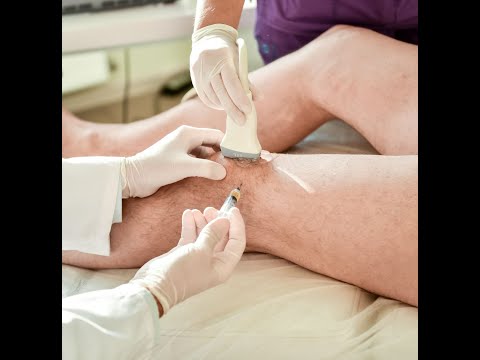
Injections are adjuncts, never the whole plan. Used well, they settle pain enough to open a window for the strengthening that actually changes the trajectory. Options include cortisone for a genuine inflammatory flare (used sparingly, as repeated injections in short succession can accelerate cartilage loss), hyaluronic acid to improve joint lubrication, and PRP in selected patients. Newer agents such as polyacrylamide hydrogel ( Arthrosamid) are available but expensive, with limited long-term evidence. All injections are delivered under ultrasound guidance for accuracy.
A note on Pentosan (PPS): Pentosan does not yet have TGA approval in Australia for osteoarthritis and remains investigational until the Phase 3 trial is completed and published. Dr Samra is not prescribing Pentosan to new patients, and will only consider it once TGA approval is obtained. You can read our full reasoning on the Pentosan evidence page.
The evidence
National standards & Dr Samra’s contribution
Dr David Samra contributed to the first Australian Osteoarthritis of the Knee Clinical Care Standard (ACSQHC, 2017), the national standard that defines best-practice osteoarthritis care for clinicians and health services across Australia. The Standard was revised in 2024, and its core messages remain the foundation of how we practise: diagnose clinically, treat with exercise and weight support first, use the right medicines, and avoid low-value care.

- Australian Commission on Safety and Quality in Health Care. Osteoarthritis of the Knee Clinical Care Standard. Sydney: ACSQHC; 2017. Dr David Samra: contributor to the development of this first edition.
- Australian Commission on Safety and Quality in Health Care. Osteoarthritis of the Knee Clinical Care Standard (revised edition). Sydney: ACSQHC; 2024. safetyandquality.gov.au/oak-ccs
- Ackerman IN, et al. Ensuring a fit-for-purpose resource for consumers, clinicians and health services: the updated Osteoarthritis of the Knee Clinical Care Standard. Med J Aust 2024;221:197–200. doi:10.5694/mja2.52375
Common questions
Osteoarthritis FAQs
Not quite, and the distinction matters for treatment. Osteoarthritis involves wear of cartilage, but it is also an inflammatory and metabolic problem: there are strong links between higher levels of arthritic pain, poor metabolic health and weight gain. That is actually good news, because it means there are many more treatment targets than the cartilage alone.
Usually not. Under the national Clinical Care Standard, osteoarthritis of the knee is diagnosed clinically, from your history and examination, and imaging is not routinely required. When imaging is clinically warranted, X-ray is the first line. Just as importantly, the severity of change on a scan often does not match the severity of symptoms, and the human body can cope extremely well with imperfection.
Lifestyle treatment: the combination of the right exercise, strengthening of the muscles supporting the joint, and weight reduction where relevant. This is the consistent message of the national Clinical Care Standard and international guidelines, and it also interrupts the metabolic spiral that links joint pain to worsening general health. Everything else, medications, injections and surgery included, works best on top of this foundation.
As adjuncts, yes, in the right patient at the right time. A corticosteroid injection can settle a genuine inflammatory flare, used sparingly. Hyaluronic acid can improve joint lubrication in the osteoarthritic knee, and PRP is an option in selected patients. Newer options such as Arthrosamid exist but are expensive with limited long-term evidence. All are delivered under ultrasound guidance, and none replaces the exercise and weight foundations.
When the joint disease is severe, symptoms are no longer controlled by a proper course of non-surgical care, and quality of life demands it. Joint replacement is highly effective in the right patient at the right time. In younger patients we work especially hard to delay it, because registry data tell us that patients under 55 tend to wear out their prostheses faster.
Told it’s “just arthritis” and to put up with it?
Our Sport and Exercise Physicians in Leichhardt treat osteoarthritis the way the national standard intends: an accurate clinical diagnosis, a plan built on exercise and metabolic health, and judicious use of every evidence-based adjunct.
This page provides general information only and is not a substitute for personalised medical advice. Please consult a qualified health practitioner for assessment of your individual circumstances.