

In contemporary longevity medicine, exercise is not a lifestyle adjunct — it is the single most powerful intervention available for extending healthspan. This piece sets out the evidence, the physiology, and the way we measure and prescribe it at Progressive Sports Medicine in Leichhardt, Sydney.
- 1 Exercise as the dominant longevity intervention
- 2 VO₂ max and all-cause mortality
- 3 Strength as a parallel risk signal
- 4 Fitness in the context of traditional risk factors
- 5 The functional outcome lens: the Centenarian Decathlon
- 6 Role modelling and behavioural credibility
- 7 Quantifying exercise health: our four-domain framework
- 8 Metabolic flexibility and the meaning of RER
- 9 Specialist interpretation of metabolic testing
- 10 The hybrid engine model
- 11 Where exercise exerts its effect
- 12 Zone 2 training and mitochondrial repair
- 13 Ageing trajectories are modifiable
- 14 Grip strength as a vital sign
- 15 Resistance training and lean mass preservation
- 16 Muscle and bone as longevity capital
- 17 The role of DEXA
- 18 Functional translation: rucking and load carriage
- 19 Exercise as combination therapy
- 20 The exercise pyramid and the case for consistency
- · References
01 Exercise as the dominant longevity intervention

In contemporary longevity medicine, exercise remains the single most powerful intervention we have. It exceeds, by a significant margin, any pharmacological, procedural, or supplement-based strategy currently available. That is not a marketing statement. It is what the pooled epidemiology and physiology say when you look across the literature with care.
This piece is not about athletic performance, and it is not about training for its own sake. The discussion below is about preserving independence, metabolic stability, cognitive function, and physiological reserve across decades. The patients we see at Progressive Sports Medicine in Leichhardt are largely not asking how long they will live. They are asking whether, in their seventies and eighties, they will still be able to climb stairs without thinking about it, lift a grandchild, walk a steep track without anxiety about a fall, and carry on with the activities that give their lives meaning. The answer to those questions is mostly written in their cardiorespiratory fitness, their muscle, and their movement quality — and most of that is modifiable, even decades before independence becomes a clinical concern.
The evidence supporting exercise as upstream biology, rather than as a generic lifestyle recommendation, has consolidated dramatically over the last two decades. Regular physical activity does not simply extend lifespan. It extends healthspan — the period of life lived in good function. The Bente Pedersen and Bengt Saltin review in the Scandinavian Journal of Medicine and Science in Sports remains a useful reference point here. Their synthesis covered the evidence for prescribing exercise as therapy across 26 different chronic diseases — cardiovascular, metabolic, pulmonary, musculoskeletal, neurological, psychiatric, and oncological 1 . Exercise is not a generalist intervention because it is unfocused. It is a generalist intervention because it acts on shared underlying biology — mitochondrial function, vascular health, insulin signalling, neuromuscular integrity, and inflammation — that nearly every chronic disease shares.
Exercise is not a lifestyle adjunct. It is the most potent multi-system intervention available for extending healthspan.
02 VO₂ max and all-cause mortality

The inverse relationship between cardiorespiratory fitness and all-cause mortality is one of the most robust findings in preventive medicine. Mandsager and colleagues, working from a cohort of 122,007 adults at the Cleveland Clinic with a median follow-up of 8.4 years, found that cardiorespiratory fitness was inversely associated with all-cause mortality with no observed upper limit of benefit. Adults in the highest fitness category had the lowest risk-adjusted mortality — lower than current smokers, lower than patients with diabetes, lower than patients with end-stage renal disease 2 .
The Kodama meta-analysis from JAMA anchored the dose-response relationship more precisely. Pooling data across observational cohorts, every 1-MET increase in maximal aerobic capacity was associated with approximately a 13 per cent reduction in all-cause mortality and 15 per cent reduction in coronary heart disease and cardiovascular events in healthy men and women 3 . To put that in clinical context, a 1-MET improvement is achievable for most untrained adults within a few months of structured aerobic work. The patients who benefit most, in absolute terms, are those starting from the lowest fitness categories. The risk reduction is steepest at the bottom of the curve.
This is the single most clinically actionable insight in the data. We do not need to make sedentary people elite. We need to move them away from the bottom of the curve. The leverage is enormous. A patient who progresses from a low fitness category to a moderate one has changed their mortality trajectory more than most pharmacological interventions can achieve, and the change has compounding benefits across cardiovascular, metabolic, and cognitive domains.
The association between cardiorespiratory fitness and mortality persists after adjustment for body mass index, smoking, hypertension, and diabetes. Low fitness is an independent mortality risk factor, not a proxy for these other variables. Clinically, this is why we treat VO₂ max as a vital sign rather than a performance metric. It is one of the few measurements we can take in the clinic that, by itself, predicts decades of outcomes.
03 Strength as a parallel risk signal
Strength shows a similarly powerful association with mortality and adverse outcomes. The Prospective Urban Rural Epidemiology (PURE) study, led by Leong and colleagues across 17 countries and 139,691 participants, demonstrated that grip strength is inversely associated with all-cause mortality, cardiovascular mortality, and incident cardiovascular disease. Each 5-kilogram reduction in grip strength was associated with a 16 per cent increased risk of all-cause mortality and a 17 per cent increased risk of cardiovascular mortality, even after adjustment for traditional risk factors 4 . Notably, the relationship between grip strength and mortality in that study was stronger than the relationship between systolic blood pressure and mortality.
Beyond grip, the broader meta-analytic evidence on muscular strength is equally compelling. García-Hermoso and colleagues, pooling cohort data from approximately two million men and women, confirmed that higher upper- and lower-body muscular strength was associated with a significantly lower risk of all-cause mortality across age groups and populations 5 . Strength, in other words, is not just a sport-specific attribute. It is a biological reserve marker, in the same family as cardiorespiratory fitness, and it carries independent prognostic information.
Notably, loss of strength often predicts adverse outcomes earlier than loss of aerobic capacity, particularly in ageing populations. Strength reflects the integrity of multiple systems at once — motor neuron function, muscle mass, neuromuscular coordination, anabolic signalling, and the chronic inflammatory milieu. When it falls, it falls because something further upstream is failing. From a longevity perspective, that makes resistance training non-optional. We do not get to opt out of strength work if our goal is to age well.
04 Fitness in the context of traditional risk factors
One of the more striking patterns in the cardiorespiratory fitness literature is how fitness compares against the traditional cardiovascular risk factors that dominate primary care discussions. Large cohort analyses, including the Mandsager Cleveland Clinic cohort and the Cooper Center Longitudinal Study, demonstrate that individuals in the lowest fitness quartile carry mortality risk comparable to, or exceeding, traditional cardiovascular risk factors. In the Mandsager dataset, the increased mortality associated with low fitness was greater than that associated with smoking, diabetes, hypertension, or end-stage kidney disease 2 .
Conversely, individuals in higher fitness categories often exhibit lower mortality than otherwise similar patients treated medically for hypertension or dyslipidaemia alone. This does not mean medications are unhelpful — they are, and we use them when indicated. It means exercise modifies underlying biology rather than merely treating downstream risk markers. Fitness changes the substrate. Pharmacotherapy adjusts a marker that sits on top of that substrate. They are not competing strategies; they work in different layers.
Clinically, the implication is that exercise should be framed as first-line therapy, not adjunctive lifestyle advice. The way we communicate this in clinic matters. When exercise is offered as a vague suggestion alongside a confidently dosed medication, patients reasonably conclude that the medication is the primary intervention. When exercise is prescribed with the same clinical specificity as a medication — with a target, a dose, a frequency, and a follow-up plan — the conversation, and the outcome, change.
05 The functional outcome lens: the Centenarian Decathlon

Longevity is not defined solely by survival, and it is not adequately measured by maximal effort either. The Centenarian Decathlon, a concept popularised by Dr Peter Attia, reframes exercise goals around functional thresholds rather than performance metrics. The exercises in the decathlon are deliberately mundane: rising from the floor unassisted, climbing stairs while carrying groceries, lifting and playing with a grandchild, walking three kilometres briskly, balancing on one leg for thirty seconds, stepping down from a height softly, pushing open a heavy door, climbing onto a chair or bench, hiking a moderate hill, recovering from a trip or slip.
These are not athletic benchmarks. They are independence markers. The patient who can perform all ten in their eighties is functionally autonomous. The patient who cannot perform several of them is, in practical terms, dependent on others to navigate ordinary life. The framework is useful clinically because it reverses the usual planning direction. Rather than starting with the patient’s current training and asking what to add, we start with the function we want to preserve in three or four decades and reverse-engineer the training to get there. That requires building reserve early, while adaptation remains feasible. Most of these capacities cannot be reclaimed quickly once they are lost.
In clinical conversations, this framing changes the way patients think about training load. The question is no longer “how hard should I train this week”. The question becomes “what capacities am I building, and will they still be available to me when I need them most”.
Your real sport is life. Train for your future self.
06 Role modelling and behavioural credibility

There is an underrated clinical point worth pausing on. The example of clinicians like Dr Howard Luks, an orthopaedic sports medicine surgeon and prominent advocate for active ageing, illustrates that ageing does not necessitate decline. Watching a clinician in their late sixties or seventies demonstrate progressive strength work, balance training, and aerobic intervals does something that no amount of patient education can replicate. It reframes ageing as an adaptive process rather than as a time-limited rehabilitation problem.
In clinic, this matters more than I once thought it did. Patients arrive with strong narratives about what is and is not possible at their age, often shaped by what they have observed in their own parents and grandparents. Those narratives can be the most significant barrier to progress. Demonstrating, through credible examples and through our own approach to movement, that the trajectory of decline is modifiable, opens up a different kind of clinical work. Patients begin to take training seriously, not because they are told to, but because they have seen it produce meaningful function in adults their age and older.
Our role at Progressive Sports Medicine is, in part, to model and enable this. The patients who progress most consistently are not the ones who train hardest. They are the ones who have come to see ongoing movement as a long-term identity rather than a short-term project.
07 Quantifying exercise health: our four-domain framework

Exercise health can be operationalised and measured in the same way that we operationalise cardiometabolic risk. At Progressive Sports Medicine, we assess four objective domains and one patient-led domain. The four objective domains are VO₂ max for aerobic capacity, grip strength as a biological ageing proxy, functional mobility as a fall-risk and independence marker, and DEXA-derived lean mass as a sarcopenia and metabolic-risk marker. These map onto, but extend, the kinds of measurements that any well-equipped sports physician’s clinic should be able to perform.
The fifth domain is patient goals — specifically the functional tasks the patient cares about being able to do in twenty or thirty years. This is where the Centenarian Decathlon framework becomes useful again. We are not interested in chasing arbitrary numerical targets. We are interested in identifying the gap between the patient’s current capacity, their trajectory, and the function they want to keep, and then bridging that gap with a training prescription.
Together, these five domains form what we call an Exercise Health Index. It allows targeted intervention in the same way that cardiology stratifies patients by ASCVD risk or endocrinology stratifies patients by HbA1c trajectory. The framework draws on multiple foundational sources — Mandsager and colleagues for VO₂ max as a vital sign 2 , Leong and colleagues for grip strength as a global biomarker 4 , the García-Hermoso meta-analyses for muscular strength as an independent mortality predictor 5 , and the European Working Group on Sarcopenia in Older People (EWGSOP2) consensus on sarcopenia diagnosis and management 6 .
08 Metabolic flexibility and the meaning of RER

Metabolic flexibility is the capacity to transition efficiently between fat and carbohydrate oxidation in response to substrate availability and metabolic demand. It is one of the more useful concepts in modern preventive medicine because it links skeletal muscle physiology, mitochondrial function, and insulin sensitivity into a single measurable construct.
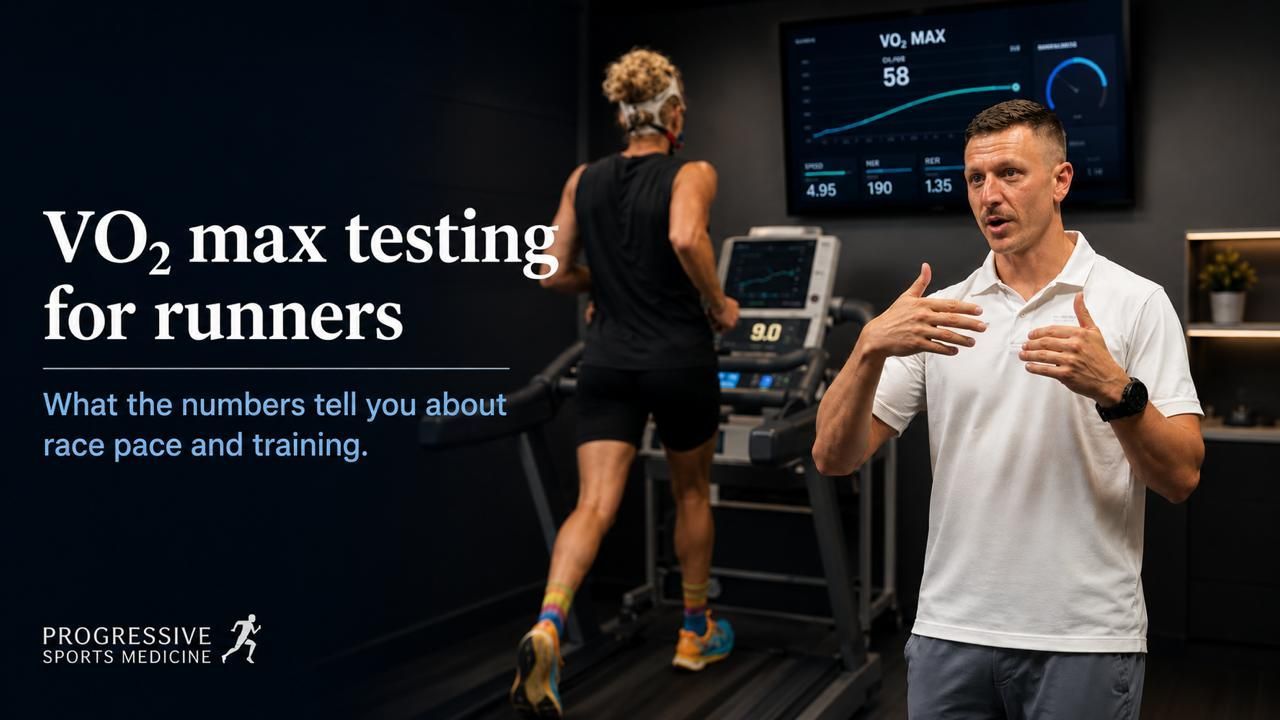
In clinic, we measure metabolic flexibility using indirect calorimetry. The patient breathes through a mask connected to a metabolic cart. The system measures oxygen uptake (VO₂) and carbon dioxide output (VCO₂) breath-by-breath, and calculates the respiratory exchange ratio (RER) as VCO₂ divided by VO₂. An RER close to 0.7 reflects predominantly fat oxidation. An RER close to 1.0 reflects predominantly glucose oxidation. The transition between these states across exercise intensity is the metabolic flexibility curve.
San-Millán and Brooks, working with professional endurance athletes, moderately active healthy adults, and adults with metabolic syndrome, demonstrated that the position and shape of this curve differs strikingly between groups. Athletes oxidise fat efficiently across a wide range of intensities and only transition heavily towards carbohydrate use at high power outputs. Adults with metabolic syndrome show an early shift toward glucose dependence and elevated blood lactate, even at low workloads — a pattern they termed metabolic inflexibility 7 . The implication is that loss of metabolic flexibility is a measurable, mechanistically grounded feature of insulin resistance and mitochondrial dysfunction, often preceding overt dysglycaemia.
This provides a mechanistic bridge between exercise physiology and metabolic disease prevention. Metabolic testing tells us, on a given day in a given patient, where on this spectrum they sit. That is far more informative than a fasting glucose or even an HbA1c, which tend to lag the underlying physiology by years.
09 Specialist interpretation of metabolic testing

Performing metabolic testing well, and interpreting it usefully, are two different skills. At Progressive Sports Medicine, VO₂ max testing, RER, and lactate threshold work are performed and interpreted by an Accredited Exercise Physiologist (AEP). This matters because off-the-shelf consumer fitness data and bare numerical outputs from a metabolic cart are, on their own, of limited clinical utility. The clinical value comes from the integration: how do these numbers relate to this patient’s training history, recovery, sleep, comorbidities, medications, and the functional goals we have agreed on.
Specialist interpretation allows exercise prescription to be individualised and physiologically targeted rather than generic or simply intensity-driven. Two patients with similar VO₂ max values may need very different prescriptions — one may have intact aerobic capacity but poor metabolic flexibility, another may have excellent fat oxidation but a low ceiling for high-intensity work. The training that addresses the underlying gap is what produces durable change. Generic guidance, even when well-intentioned, often misses the leverage point.
This is where a multidisciplinary team, with the sport and exercise medicine physician working alongside an AEP, sleep physician, dietitian, and the patient’s GP, becomes substantively different from a single-discipline approach. None of us individually has all the information. The integration is what produces the prescription.
10 The hybrid engine model

It is sometimes useful to translate metabolic flexibility into a more accessible analogy. Insulin-resistant physiology behaves like a vehicle that runs only on glucose. It needs frequent refuelling, struggles for endurance, runs less efficiently than it should, and over time accumulates damage in its powertrain. A high RER at rest, partial fat oxidation, late substrate switching during exercise, and elevated visceral adiposity are the fingerprints of this state.
Improving aerobic fitness, and to a lesser extent strength training, restores fat oxidation capacity. Patients become able to draw on fat stores at rest and during prolonged low- to moderate-intensity activity, switching to glucose only when the workload requires it. This is the hybrid engine. Clinically, the translation of this shift is reasonably well characterised: reduced visceral adiposity, improved insulin sensitivity, more stable energy across the day, and reduced cardiometabolic risk.
Genetic factors influence baseline insulin sensitivity. The phenotype is, however, highly trainable. Most patients we work with can move meaningfully along this spectrum within three to six months of structured Zone 2 work, dietary adjustment, and resistance training. The detailed metabolic biology of insulin resistance, ectopic fat, and hepatic glucose output is covered in our metabolic health pillar. Here, the relevant point is narrower: exercise is the modality that physically changes the engine.
11 Where exercise exerts its effect

Insulin resistance does not develop in a single tissue. It develops across three interacting levels. The first is glycaemic load — the volume and quality of carbohydrate entering the system, primarily diet-driven. The second is skeletal muscle glucose disposal — the capacity of muscle to take up glucose under insulin stimulation. The third is hepatic glucose output — the liver’s capacity to suppress endogenous glucose production appropriately when fed.
Exercise primarily targets the second of these levels, and in doing so changes the dynamics of the other two. Skeletal muscle is the dominant glucose sink in the body. When muscle is more insulin-sensitive and metabolically active, postprandial glucose excursions fall, the pancreas does not need to work as hard, and the liver receives a different signal set. The detailed physiology, including the role of GLUT4 expression and translocation in this process, is well-established — Holloszy’s body of work, summarised in his Comprehensive Physiology review, mapped how endurance exercise training increases mitochondrial content and GLUT4 expression in skeletal muscle, and how these changes mediate much of the metabolic benefit of training 8 .
This explains why combined resistance and aerobic training consistently outperform dietary restriction alone in long-term metabolic control. Diet alters the input. Exercise alters the system that receives the input. Pharmacotherapy may assist later in the trajectory, particularly when it can target specific receptor pathways, but exercise addresses the root physiology. In our clinical practice, exercise is therefore positioned as the foundation rather than as an adjunct.
12 Zone 2 training and mitochondrial repair

Zone 2 training occupies a metabolic sweet spot. At this intensity — conversational pace, blood lactate stable at approximately 1.7 to 2.0 mmol/L, RER in the 0.85 to 0.90 range — fat oxidation is near maximal and mitochondrial adaptation signalling is strong. Patients can usually hold a conversation in full sentences during Zone 2 work, with breathing slightly elevated but unforced.
This is not an intensity-driven intervention. It is a volume- and consistency-dependent one. The benefits of Zone 2 work scale with cumulative time at the right intensity rather than with effort spikes. Holloszy’s mechanistic work, building on decades of skeletal muscle physiology, demonstrated that endurance training increases mitochondrial enzyme content and respiratory capacity, with downstream effects on insulin sensitivity, fat oxidation, and metabolic flexibility 8 . The typical Zone 2 prescription we use sits in the range of three to four sessions per week of 45 to 60 minutes, building over months.
For many of the patients we see, Zone 2 is the missing element of an otherwise well-intentioned training program. Either they are doing too much high-intensity work without an aerobic base, which leads to chronic fatigue and stalled progress, or they are not generating enough volume of moderate aerobic stimulus to drive mitochondrial adaptation in the first place. Identifying and correcting that gap is often the single change that produces the most durable improvement.
13 Ageing trajectories are modifiable

VO₂ max declines with age. Untrained adults lose roughly 10 per cent of their aerobic capacity per decade after the age of 30, with the rate of loss accelerating in later decades. The slope of decline is, however, modifiable. Structured training can effectively shift a patient’s functional age upward by a decade or more relative to their untrained peers.
This matters clinically because below certain VO₂ thresholds, independent living becomes physiologically constrained. The threshold sits in the region of 18 mL/kg/min for daily independence in older adults — enough capacity to walk on flat ground, manage stairs, and respond to unexpected demands like a brisk walk to catch a bus. As the older population approaches this threshold, ordinary activities become disproportionately effortful, recovery slows, and small functional setbacks compound rapidly.
The Pedersen and Saltin synthesis 1 makes the broader point: across cardiovascular disease, type 2 diabetes, depression, and cognitive decline, exercise is therapeutically active, and that activity is largely mediated through changes in cardiorespiratory fitness, mitochondrial function, and skeletal muscle quality. The strong correlation between aerobic capacity and ageing outcomes is not a coincidence. It is mechanism.
From a longevity perspective, the practical lesson is that VO₂ max in midlife is not a fixed inheritance. Patients who train through their forties, fifties, and sixties will arrive at the threshold of older age with substantially more reserve than those who do not. That reserve is what the next two or three decades of life are spent drawing down on.
14 Grip strength as a vital sign

Grip strength stratification, drawn from the PURE cohort and reproduced in subsequent meta-analyses, shows a stepwise gradient of risk. Patients in the weakest quartile carry approximately twice the all-cause mortality risk of those in the strongest. The strongest quartile shows roughly 30 per cent lower all-cause mortality compared with the population average 4 . The relationships hold across countries and across age groups, and they persist after adjustment for the usual cardiovascular risk variables.
Loss of strength reflects loss of reserve across multiple systems at once. Neuromuscular function, total muscle mass, mitochondrial integrity, anabolic responsiveness, and chronic inflammatory tone all converge on what we measure as grip strength. That is why such a simple measurement carries such durable prognostic value. It is not the grip itself that is doing the predictive work — the grip is a window onto the underlying biology.
García-Hermoso and colleagues, in their meta-analysis of approximately two million participants, confirmed the same gradient using broader measures of muscular strength, strengthening the conclusion that low strength is an independent and modifiable mortality risk factor 5 . Grip strength therefore functions as a practical clinical biomarker of ageing. We measure it in clinic, track it over time, and use it as a prompt to escalate or adjust resistance training prescriptions when the trajectory turns down.
15 Resistance training and lean mass preservation

Not all exercise preserves muscle equally, and this is a point that gets lost in well-meaning generic exercise advice. Resistance training produces the most meaningful gains in lean mass. High-intensity interval training (HIIT) contributes modestly to lean mass and meaningfully to cardiovascular fitness. Combined endurance and resistance programmes can be valuable, but they often underdose resistance unless they are deliberately structured to do so.
If sarcopenia prevention is a goal — and after the age of 40, it should be — then resistance training must be explicitly prescribed. Saeidifard and colleagues, in their meta-analysis of resistance training and mortality, found that resistance training was associated with a 21 per cent reduction in all-cause mortality, and that the combination of resistance and aerobic training conferred a 40 per cent reduction — substantially greater than either alone 9 . Momma and colleagues, working from sixteen prospective cohort studies in the British Journal of Sports Medicine , reached a complementary conclusion: muscle-strengthening activities were associated with 10 to 17 per cent lower risk of all-cause mortality, cardiovascular disease, total cancer, diabetes, and lung cancer, with the maximum risk reduction observed at approximately 30 to 60 minutes per week of muscle-strengthening work 10 .
The dose required is not extreme. Two to three structured resistance sessions per week, progressed thoughtfully and recovered from properly, is enough for most patients to preserve and modestly grow lean mass into their seventies and beyond. The mistake we see most often is not under-trained beginners attempting too much, but well-intentioned aerobic exercisers who simply never include enough deliberate resistance work to protect their muscle mass over decades.
16 Muscle and bone as longevity capital

It is helpful, in clinic, to talk about muscle and bone not as aesthetic tissues but as longevity capital. From midlife onwards, untrained individuals experience an accelerating loss of skeletal muscle mass — sarcopenia — and a parallel decline in bone mineral density. Both processes increase the risk of falls, fragility fractures, prolonged hospitalisation, and loss of independence.
The European Working Group on Sarcopenia in Older People (EWGSOP2) consensus formalised the diagnosis of sarcopenia around three components: low muscle strength, reduced muscle quantity or quality, and impaired physical performance. Under that framework, sarcopenia is recognised as a clinical disease entity rather than a normal feature of ageing, and it is one that responds, often substantially, to deliberate intervention 6 . The intervention with the strongest evidence base is mechanical loading combined with adequate dietary protein.
Adequate protein intake matters because resistance training, by itself, only translates into muscle protein accretion when amino acid availability is sufficient. The clinical guidance we use sits in the range of 1.2 to 1.6 grams of protein per kilogram of body weight per day for active adults over 50, distributed across meals. Adjunctive therapies, including pharmacological options for selected patients, can have a role; however, mechanical loading remains foundational, and there is no pharmacological substitute for it.
Reserve must be built before it is required. The patient who builds muscle and bone in their forties and fifties spends their seventies and eighties drawing down on that reserve gracefully.
17 The role of DEXA

Dual-energy X-ray absorptiometry (DEXA) allows direct quantification of total and regional lean mass, fat mass, bone mineral density, and side-to-side asymmetry. In a longevity context, this information matters because weight and body mass index are poor proxies for physiological reserve. Two patients with identical BMI can have very different lean mass, very different visceral adiposity, and very different bone mineral density. The composition, and the trajectory of that composition over time, is what matters clinically.
For older adults, DEXA-derived measurements feed directly into the EWGSOP2 sarcopenia framework 6 and into the body-composition components of metabolic risk assessment. Tracking these measurements every twelve to twenty-four months provides early signal of unfavourable trajectories — falling lean mass, rising visceral fat, declining bone density — well before they translate into functional consequences. That early signal is what makes intervention feasible. Once a patient is symptomatically sarcopenic, the work is much harder.
From a practical standpoint, DEXA also enables safer and more precise exercise and loading prescriptions, particularly in ageing or post-injury populations. Knowing where the asymmetries lie, what the bone mineral density trajectory looks like, and how lean mass is distributed allows the prescription to target the actual deficit rather than treating a generic patient profile.
18 Functional translation: rucking and load carriage

If you wanted to design a single activity that integrated Zone 2 aerobic work, posterior-chain resistance loading, axial bone loading, balance challenge, and proprioceptive demand into one durable habit, you would design something close to rucking. Walking with a weighted pack, typically at approximately 25 to 33 per cent of body weight, simultaneously delivers cardiovascular conditioning, muscular endurance, structural loading, and balance training in a way that translates directly to real-world function.
This is what we mean by functional training translation. The activity itself looks ordinary — walking, with a backpack, on varied terrain. The physiological demands are anything but ordinary. The cardiovascular load comfortably sits in Zone 2 for most patients. The posterior chain (glutes, hamstrings, paraspinals), the core, and the grip are all working continuously. Bone receives axial impact loading, which is a relevant stimulus for maintaining bone mineral density. Single-leg control and proprioception are constantly challenged, particularly on inclines or uneven ground.
In our prescription work, rucking is one of the most useful tools we have for patients who do not enjoy gym-based training. It is scalable, transferable, low-cost, and combinable with normal life — a weighted pack on the morning walk to a coffee shop produces real adaptations. It also reframes what training can look like. The patient who finds the gym intimidating but happily walks for an hour can build remarkable longevity capital this way over years.
19 Exercise as combination therapy

Different exercise modalities exert distinct physiological effects, and from a longevity perspective, no single modality is sufficient. We find it useful, in clinic, to talk about exercise as combination therapy with four drug classes.
Zone 2 aerobic training drives mitochondrial biogenesis, fat oxidation, and metabolic flexibility. It is the foundation — most other adaptations rest on it. Zone 5 intervals (HIIT) expand VO₂ max and cardiac reserve. The peak capacity that determines whether a patient can climb a flight of stairs at 75 without difficulty is largely set by this work. Resistance training builds and preserves muscle mass and force production, with downstream effects on falls risk, sarcopenia, and metabolic disposal. Stability and mobility work maintains joint range, neuromotor control, and movement quality — the substrate that allows everything else to be performed safely.
These four modalities are complementary, not interchangeable. A patient who does only Zone 2 work will have excellent metabolic flexibility and a deep aerobic base, but will lose strength and power over time. A patient who does only resistance training will be strong but cardiovascularly under-built. A patient who does only HIIT will get fit fast and burn out. The integrated programme — typically Zone 2 three to five times per week, resistance work two to three times per week, one HIIT session per week, and brief daily stability and mobility work — produces durable, broadly distributed adaptation.
Saeidifard and colleagues’ finding that combined aerobic and resistance training was associated with a 40 per cent reduction in all-cause mortality, compared with 21 per cent for resistance alone, illustrates this point empirically 9 . Garcia and colleagues’ dose-response meta-analysis of non-occupational physical activity, pooling data from large prospective cohorts, similarly found that meeting both aerobic and muscle-strengthening guidelines conferred greater protection against cardiovascular disease, cancer, and mortality than either alone 11 . The combination is not just additive; it is mechanistically synergistic.
20 The exercise pyramid and the case for consistency

Across the lifespan, exercise follows a hierarchy. Foundational stability and mobility sit at the base — movement quality, joint integrity, and neuromotor control. On top of that, daily movement and an aerobic base, predominantly Zone 2 work, three to five times per week. Above that, progressive strength training two to three times weekly. Layered on top, high-intensity and VO₂ max work approximately once weekly. And running through the entire structure: consistency, recovery, and purpose.
The pyramid metaphor is useful because it reflects what actually drives outcomes over decades. Without the base — stability, mobility, daily movement, aerobic capacity — the higher layers cannot be built or sustained safely. Patients who attempt to skip straight to high-intensity work without the underlying foundation usually injure themselves or burn out, or both.
Equally, without consistency, none of it adapts. Adaptation is the result of repeated stimulus over time, recovered from properly, sustained for years. The patient who trains four sessions a week for ten years, with imperfect form, missed weeks, and steady gradual progression, will outperform the patient who trains six perfect sessions a week for six months and then disengages. We see this pattern reproduce itself across every domain of preventive medicine. It is also the same pattern we discussed in our recent piece on emotional health and Joyspan — the regulatory capacity that makes this kind of long-term consistency possible is itself a clinical variable, and it is something we work on alongside the physical training prescription.
The closing message of our exercise teaching at Progressive Sports Medicine is straightforward. Exercise is not a lifestyle adjunct. It is the most potent multi-system intervention available for extending healthspan. Our role at Progressive Sports Medicine is to quantify exercise health, identify early decline, and prescribe movement with the same clinical precision we would apply to any other medical therapy. The goal is not maximal effort. The goal is intelligent, sustainable training for the decades ahead.
Find out where you sit on the curve
The Progressive Longevity Program quantifies your VO₂ max, strength, body composition and metabolic flexibility, then builds a training prescription around the function you want to keep for decades.
§ References
- 1. Pedersen BK, Saltin B. Exercise as medicine — evidence for prescribing exercise as therapy in 26 different chronic diseases. Scandinavian Journal of Medicine and Science in Sports 2015;25(Suppl 3):1-72. DOI: 10.1111/sms.12581
- 2. Mandsager K, Harb S, Cremer P, Phelan D, Nissen SE, Jaber W. Association of cardiorespiratory fitness with long-term mortality among adults undergoing exercise treadmill testing. JAMA Network Open 2018;1(6):e183605. DOI: 10.1001/jamanetworkopen.2018.3605
- 3. Kodama S, Saito K, Tanaka S, et al. Cardiorespiratory fitness as a quantitative predictor of all-cause mortality and cardiovascular events in healthy men and women: a meta-analysis. JAMA 2009;301(19):2024-2035. DOI: 10.1001/jama.2009.681
- 4. Leong DP, Teo KK, Rangarajan S, et al. Prognostic value of grip strength: findings from the Prospective Urban Rural Epidemiology (PURE) study. The Lancet 2015;386(9990):266-273. DOI: 10.1016/S0140-6736(14)62000-6
- 5. García-Hermoso A, Cavero-Redondo I, Ramírez-Vélez R, et al. Muscular strength as a predictor of all-cause mortality in an apparently healthy population: a systematic review and meta-analysis of data from approximately 2 million men and women. Archives of Physical Medicine and Rehabilitation 2018;99(10):2100-2113. DOI: 10.1016/j.apmr.2018.01.008
- 6. Cruz-Jentoft AJ, Bahat G, Bauer J, et al. Sarcopenia: revised European consensus on definition and diagnosis. Age and Ageing 2019;48(1):16-31. DOI: 10.1093/ageing/afy169
- 7. San-Millán I, Brooks GA. Assessment of metabolic flexibility by means of measuring blood lactate, fat, and carbohydrate oxidation responses to exercise in professional endurance athletes and less-fit individuals. Sports Medicine 2018;48(2):467-479. DOI: 10.1007/s40279-017-0751-x
- 8. Holloszy JO. Regulation of mitochondrial biogenesis and GLUT4 expression by exercise. Comprehensive Physiology 2011;1(2):921-940. DOI: 10.1002/cphy.c100052
- 9. Saeidifard F, Medina-Inojosa JR, West CP, et al. The association of resistance training with mortality: a systematic review and meta-analysis. European Journal of Preventive Cardiology 2019;26(15):1647-1665. DOI: 10.1177/2047487319850718
- 10. Momma H, Kawakami R, Honda T, Sawada SS. Muscle-strengthening activities are associated with lower risk and mortality in major non-communicable diseases: a systematic review and meta-analysis of cohort studies. British Journal of Sports Medicine 2022;56(13):755-763. DOI: 10.1136/bjsports-2021-105061
- 11. Garcia L, Pearce M, Abbas A, et al. Non-occupational physical activity and risk of cardiovascular disease, cancer and mortality outcomes: a dose-response meta-analysis of large prospective studies. British Journal of Sports Medicine 2023;57(15):979-989. DOI: 10.1136/bjsports-2022-105669
- 12. Blair SN, Kohl HW 3rd, Paffenbarger RS Jr, Clark DG, Cooper KH, Gibbons LW. Physical fitness and all-cause mortality. A prospective study of healthy men and women. JAMA 1989;262(17):2395-2401. DOI: 10.1001/jama.1989.03430170057028
- 13. Mitchell CJ, Churchward-Venne TA, West DWD, et al. Resistance exercise load does not determine training-mediated hypertrophic gains in young men. Journal of Applied Physiology 2012;113(1):71-77. DOI: 10.1152/japplphysiol.00307.2012
Know Your Biology. Change Your Trajectory.
Specialist-led exercise health assessment and longevity training prescription in Leichhardt, Sydney.
Tue–Fri, 8:30am–6:00pm ✉ Email us office@drdavidsamra.com.au
General enquiries & referrals