

Not the vague pillar it is treated as
Emotional health is usually the pillar left out when health gets measured. Sleep gets a tracker. Fitness gets a VO2 Max number. Blood work gets a panel. Stress and connection tend to get a feeling, not a figure. That gap exists not because the underlying biology is unclear, but because a standardised, clinically useful measurement has been harder to put in front of a patient, until heart rate variability testing became practical outside a research lab.

What heart rate variability actually measures
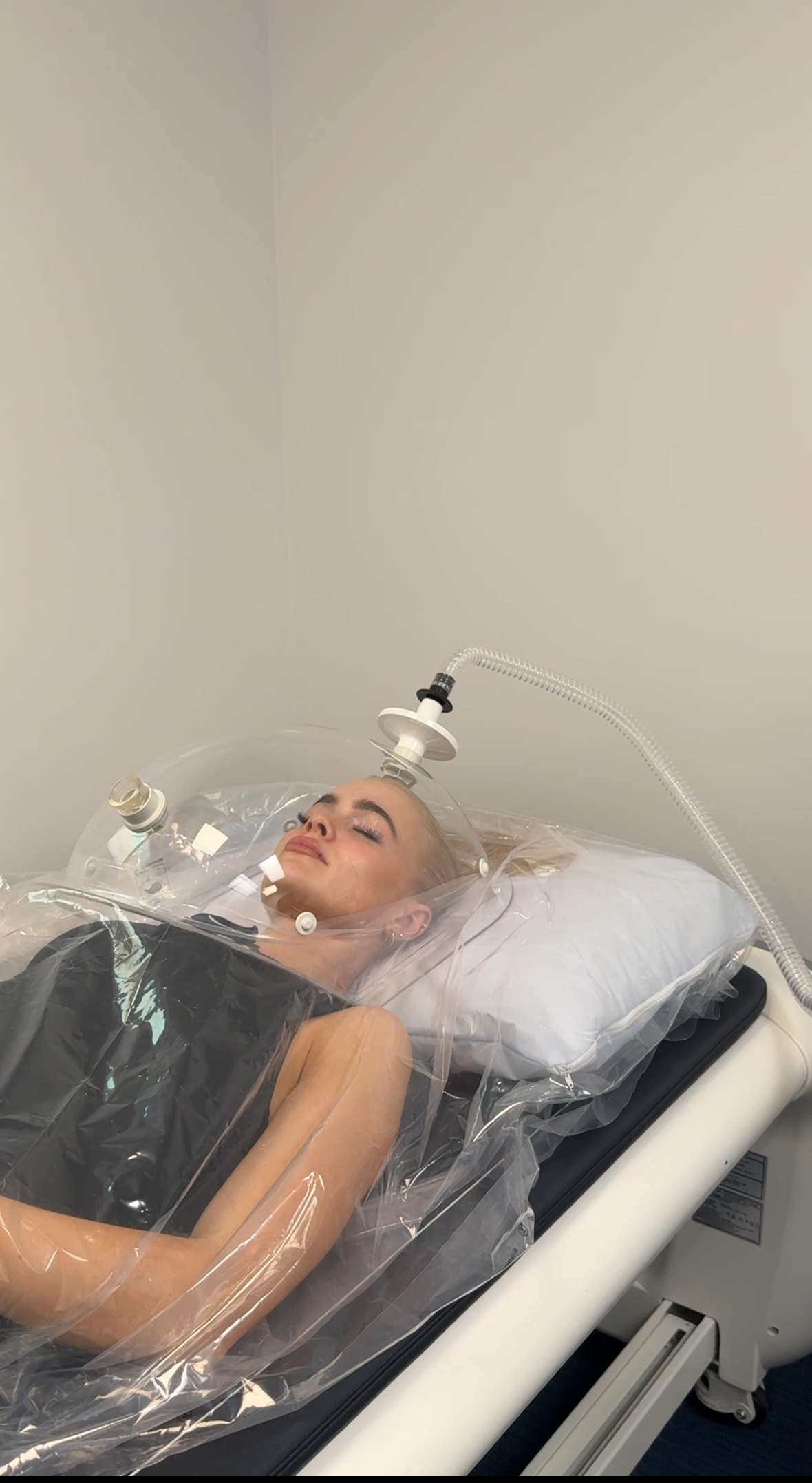
Heart rate variability, the beat to beat variation in the interval between heartbeats, is not a wellness gadget metric. It is a validated, non invasive marker of autonomic nervous system function, the balance between the sympathetic (activating) and parasympathetic (calming) branches that governs how the body responds to and recovers from stress (Shaffer and Ginsberg, 2017). A nervous system that can shift flexibly between activation and recovery tends to show a higher HRV. A persistently low HRV is associated with poorer autonomic regulation, and functions less as a wellness score and more as a window onto how the rest of the body is coping with sustained pressure. Dr Samra discusses this pattern in the practice's video education series[https://youtu.be/mXPI34jiDWI].

Chronic stress does not stay in the mind
The mechanism connecting the two is well established. Sustained psychological stress activates the hypothalamic pituitary adrenal axis and the sympathetic nervous system, and in a review of the cardiovascular evidence, Steptoe and Kivimäki found that chronic and work related stress predicts the later occurrence of coronary heart disease, with socially isolated or lonely individuals carrying a further increased risk of a first cardiac event (Steptoe and Kivimäki, 2012). Emotional health, in other words, sits inside the same physiological system already addressed through cardiovascular risk assessment at this practice [https://www.progressivespecialists.com.au/why-cardiovascular-risk-is-cumulative-not-a-10-year-score]. It is not a separate, softer category running alongside the biology. It is part of it, and the biology it shares with brain health is discussed further in this practice's article on dementia risk[https://www.progressivespecialists.com.au/dementia-brain-health].

Connection is a measurable factor too
Social connection follows the same pattern. In a meta analytic review pooling data across more than 2.2 million participants, Wang and colleagues found that social isolation and loneliness were each independently associated with a significantly increased risk of all cause mortality, with pooled effect sizes of 1.32 for social isolation and 1.14 for loneliness (Wang and colleagues, 2023). These are modest, population level effect sizes, comparable in size to other well established, moderate risk factors, not evidence that disconnection alone determines any individual's outcome. What the review does establish credibly is that social disconnection behaves, statistically, as a measurable risk factor rather than a purely subjective experience.

What this looks like in a Phase 1 assessment
None of this is a case for turning emotional wellbeing into a diagnosis, and this article does not attempt to. A Phase 1 assessment does not screen for or treat mental illness, and nothing here replaces the care of a patient's GP or a mental health specialist where that is needed. What a comprehensive assessment can do is treat the physiological signature of chronic stress, autonomic balance and recovery capacity, as data worth measuring alongside strength, fitness and metabolic markers, folded into the same diagnostic first approach already applied across this practice, rather than left as the one pillar assessed by feel.

What the evidence does not say
TWO CAVEATS WORTH KEEPING IN MIND
The key findings above are observational and population level. They describe associations, not proof that improving HRV or social connection prevents disease in any given person. Self reported loneliness and a single point HRV reading both carry real measurement limits, useful as one input alongside other markers, not a stand alone verdict on someone's health. Read together, the evidence supports treating emotional health as a physiological, trackable factor. It does not support a guarantee at either end of that sentence.
References
- Shaffer F, Ginsberg JP An overview of heart rate variability metrics and norms. Frontiers in Public Health. 2017;5:258. https://doi.org/10.3389/fpubh.2017.00258
- Steptoe A, Kivimäki M Stress and cardiovascular disease. Nature Reviews Cardiology. 2012;9(6):360 to 370. https://doi.org/10.1038/nrcardio.2012.45
- Wang F, Gao Y, Han Z, and colleagues A systematic review and meta analysis of 90 cohort studies of social isolation, loneliness and mortality. Nature Human Behaviour. 2023;7(8):1307 to 1319. https://doi.org/10.1038/s41562-023-01617-6