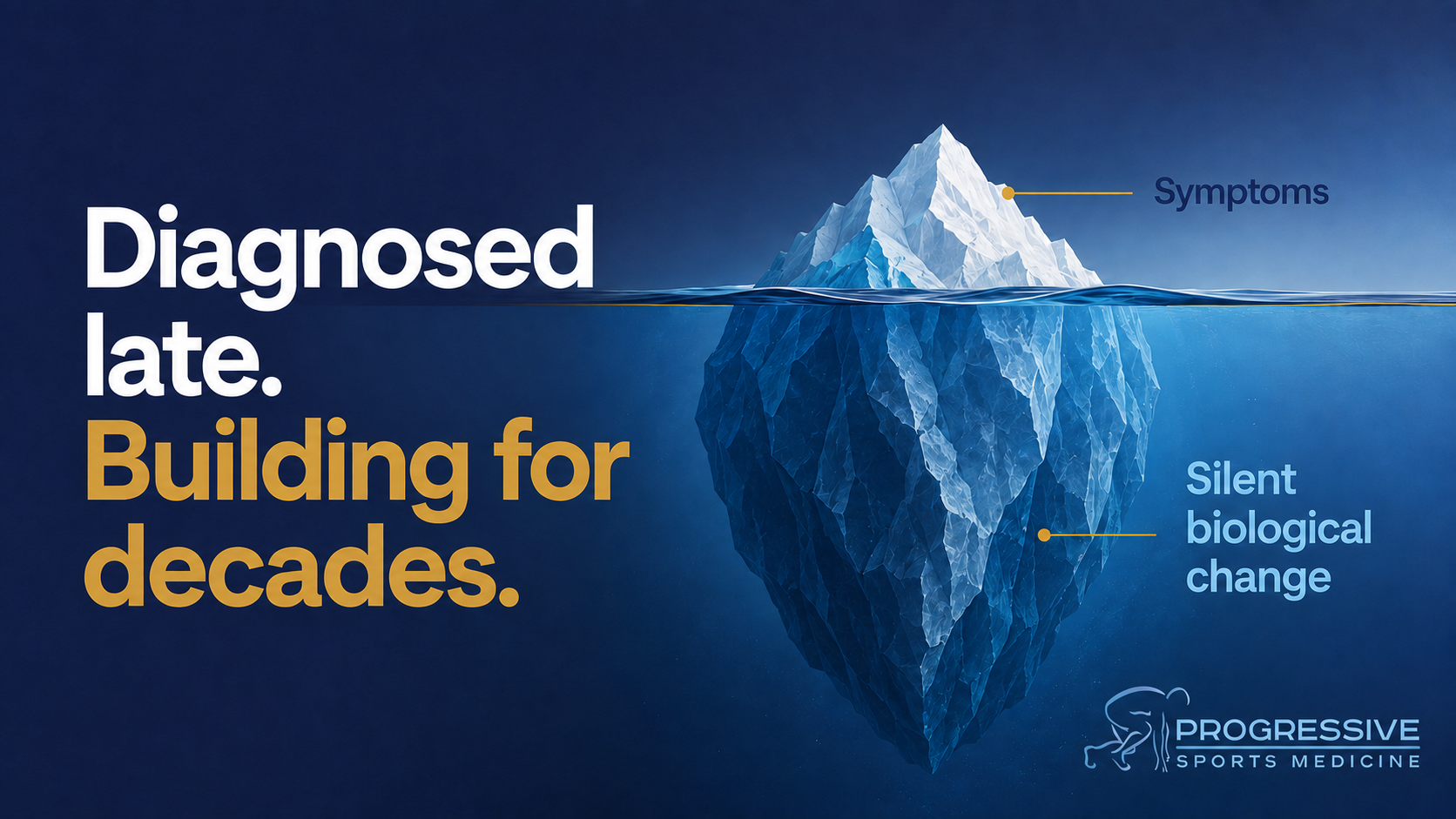



A diagnosis is a late event. The biology behind it is not.
Cancer is often described as the most random of the major chronic diseases, and there is truth in that. A large part of what turns a normal cell into a cancerous one comes down to errors that build up as cells divide across a lifetime, and those errors are not something a person can feel, test for, or undo. By the time a cancer is found, through symptoms or a scan, it has usually been developing for years.
That is the honest starting point. It is also not the whole picture. At a population level, a meaningful share of cancer risk tracks with factors that can be measured and, in principle, changed. Dr Samra covers the science behind this in a talk from the practice's video education series.

Cancer is the hardest of the four to prevent, and that is worth saying plainly
Cancer is one of four conditions, alongside cardiovascular disease, metabolic disease, and neurodegeneration, that shape health in the second half of life. Of the four, it is the least well understood at the level of prevention. We do not have the same mechanism level account of what drives most cancers that we have for atherosclerosis, described in this practice's article on cumulative cardiovascular risk, and accumulated chance events play a large role. Any honest discussion of modifiable risk has to hold that context first.
What the evidence says is modifiable
Islami and colleagues, working with American Cancer Society data, estimated that around 42 per cent of new cancer cases and 45 per cent of cancer deaths in United States adults were attributable to potentially modifiable risk factors ( Islami and colleagues, 2018). Cigarette smoking accounted for the largest single share, followed by excess body weight and alcohol intake.
That figure describes a population, not a person. It does not mean that changing these factors removes cancer risk for any individual, and it should not be read that way. What it does establish, credibly, is that the modifiable component of cancer risk is real and is not small.

The metabolic thread
Several of the factors on that list are metabolic, and they appear to be connected. An International Agency for Research on Cancer working group concluded that the absence of excess body fat lowers the risk of at least 13 cancers, among them oesophageal, colorectal, kidney, pancreatic, liver, and postmenopausal breast cancer ( Lauby-Secretan and colleagues, 2016).
The proposed mechanism is not a single pathway. Excess visceral fat is metabolically active tissue: it raises circulating insulin and insulin like growth factor, both of which act as growth signals, and it sustains a low level inflammatory state. Hanahan and Weinberg, in their widely cited account of the capabilities that tumours acquire, include altered cellular energy use and the ability to evade the immune system ( Hanahan and Weinberg, 2011). Neither observation makes metabolic health a cancer treatment. Both are reasons the metabolic environment is worth measuring rather than ignoring, the same ground covered in the nutrition article on this site.

Where physical activity fits
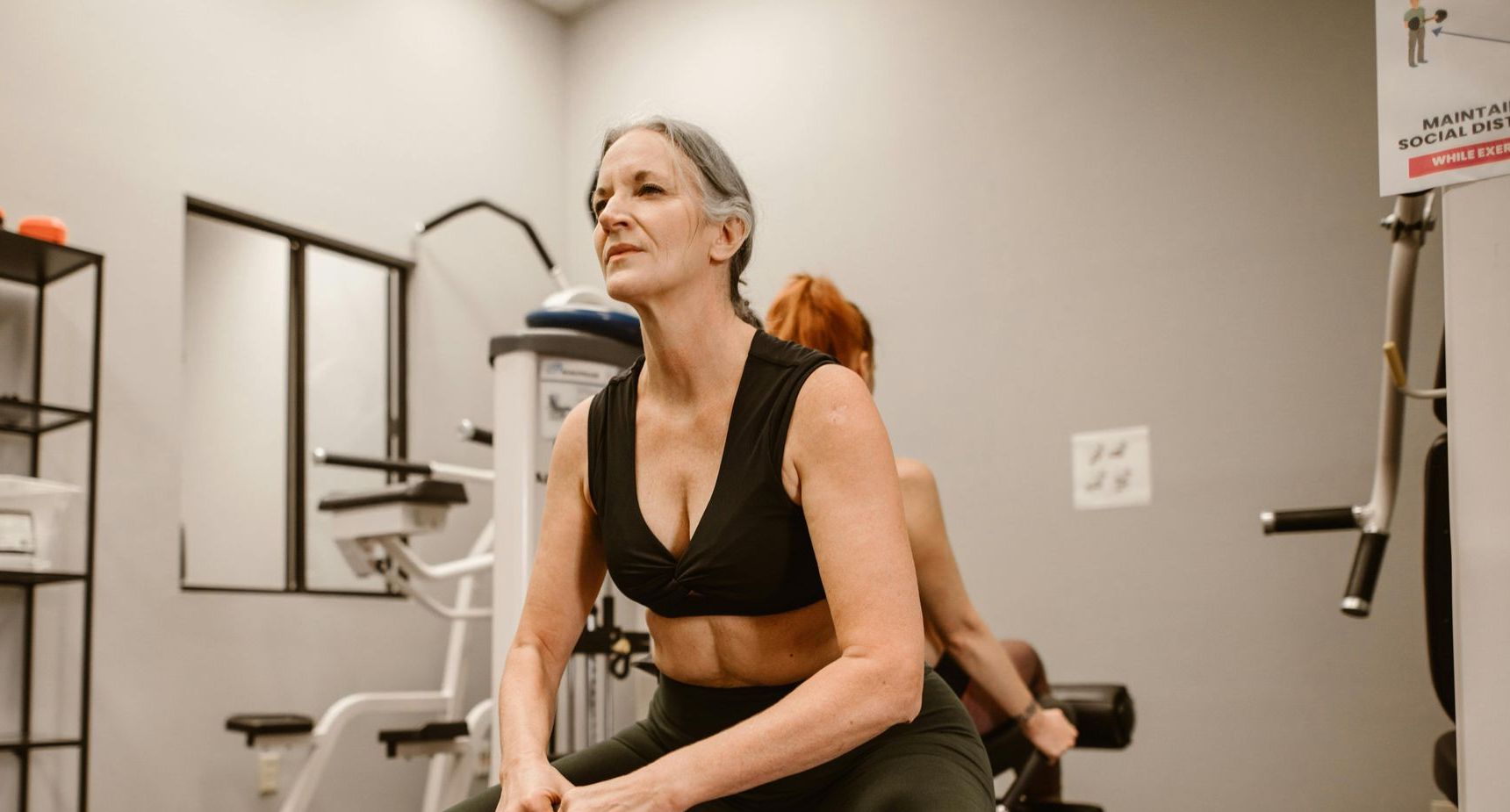
Moore and colleagues pooled data from 1.44 million adults across 12 cohorts and found that higher leisure time physical activity was associated with a lower risk of 13 of 26 cancer types studied, with the largest reductions for oesophageal, liver, kidney, and gastric cancers ( Moore and colleagues, 2016). This is an association from observational data, not proof that exercise prevents these cancers in a given person. It is consistent with the rest of the picture, and physical activity is one of the few levers that also lowers cardiovascular and metabolic risk at the same time.
What a Phase 1 assessment measures, and what it does not
A Phase 1 assessment at this practice measures several of the factors described above. DEXA body composition quantifies visceral fat and lean mass. The blood panel includes HbA1c and fasting glucose and insulin. Continuous glucose monitoring shows how the body handles food across two to four weeks. VO2 Max testing measures cardiorespiratory fitness. Read together, these describe metabolic health with more resolution than a standard check up.
None of these are cancer tests. The assessment does not screen for cancer, and this article does not suggest that it does. Cancer screening, including bowel, breast, cervical, skin, and lung screening, follows the national programmes and is a conversation to have with your GP. What the assessment offers is a clear read of the metabolic factors that sit on the modifiable side of the risk picture, in the same midlife window that matters for the other conditions in this group.
What this evidence does not say
None of this makes cancer preventable, and it would be wrong to say so. The attributable fractions reported by Islami and colleagues are modelled population estimates, not individual forecasts. The body fat and activity findings are associations, and the work by Hanahan and Weinberg describes what tumours do, not a way to stop them. No diet starves a cancer, and no degree of metabolic health removes the role of inherited risk or of chance. The evidence supports paying attention to measurable, modifiable factors. It does not support a promise at the end of that sentence.
Cancer is the hardest of the four to prevent. A meaningful part of the risk is still measurable, and it sits in midlife.
References
- Islami F, Goding Sauer A, Miller KD, and colleagues Proportion and number of cancer cases and deaths attributable to potentially modifiable risk factors in the United States. CA: A Cancer Journal for Clinicians. 2018;68(1):31 to 54. https://doi.org/10.3322/caac.21440
- Lauby-Secretan B, Scoccianti C, Loomis D, and colleagues Body fatness and cancer: viewpoint of the IARC Working Group. New England Journal of Medicine. 2016;375(8):794 to 798. https://doi.org/10.1056/NEJMsr1606602
- Moore SC, Lee IM, Weiderpass E, and colleagues Association of leisure time physical activity with risk of 26 types of cancer in 1.44 million adults. JAMA Internal Medicine. 2016;176(6):816 to 825. https://doi.org/10.1001/jamainternmed.2016.1548
- Hanahan D, Weinberg RA Hallmarks of cancer: the next generation. Cell. 2011;144(5):646 to 674. https://doi.org/10.1016/j.cell.2011.02.013