


Blood pressure gets measured. Strength gets guessed at.
Most adults can tell you their blood pressure, near enough, and often their cholesterol. Very few can tell you how much force they can actually produce, or whether it has changed in the past five years. Strength tends to sit in a mental category marked appearance or gym, somewhere outside health.
The evidence puts it somewhere else entirely. Muscle strength is one of the more informative things that can be measured about a person's long term health, and it is one of the few markers a person can directly train.
Strength is not a cosmetic measure
Muscle does more than fill out a shirt. It moves you, stabilises your joints, absorbs load when you land awkwardly, and it is where most of the glucose you eat is disposed of. Strength is the practical output of all of that: it is what stands you up from a low chair at seventy, catches you when you trip, and lets you keep doing what you want to do without negotiating with your body first.
That is why we measure it objectively rather than asking how strong you feel.
What the evidence links strength to
Two large studies are worth knowing about.
In the Prospective Urban Rural Epidemiology study, Leong and colleagues measured grip strength in almost 140,000 adults across 17 countries and followed them over time. Lower grip strength was associated with a higher risk of death from any cause and of cardiovascular death. In that cohort, grip strength was a stronger predictor of death than systolic blood pressure ( Leong and colleagues, 2015).
The UK Biobank cohort points the same way at larger scale. Across roughly half a million adults, Celis-Morales and colleagues found that every 5 kg reduction in grip strength was associated with a higher risk of all cause mortality, cardiovascular disease, respiratory disease, and several cancers. Adding grip strength to conventional risk factors modestly improved how well outcomes could be predicted ( Celis-Morales and colleagues, 2018).

READING THIS IN PROPORTION
Two points keep this in proportion. These are associations observed across large populations, not a diagnosis or a guaranteed outcome for any individual. And grip strength is partly acting as a proxy for general health and muscle quality rather than as the sole cause of the outcome. Neither point makes the measurement less useful. Both are reasons to read it alongside the rest of an assessment rather than on its own.
What strength testing actually measures
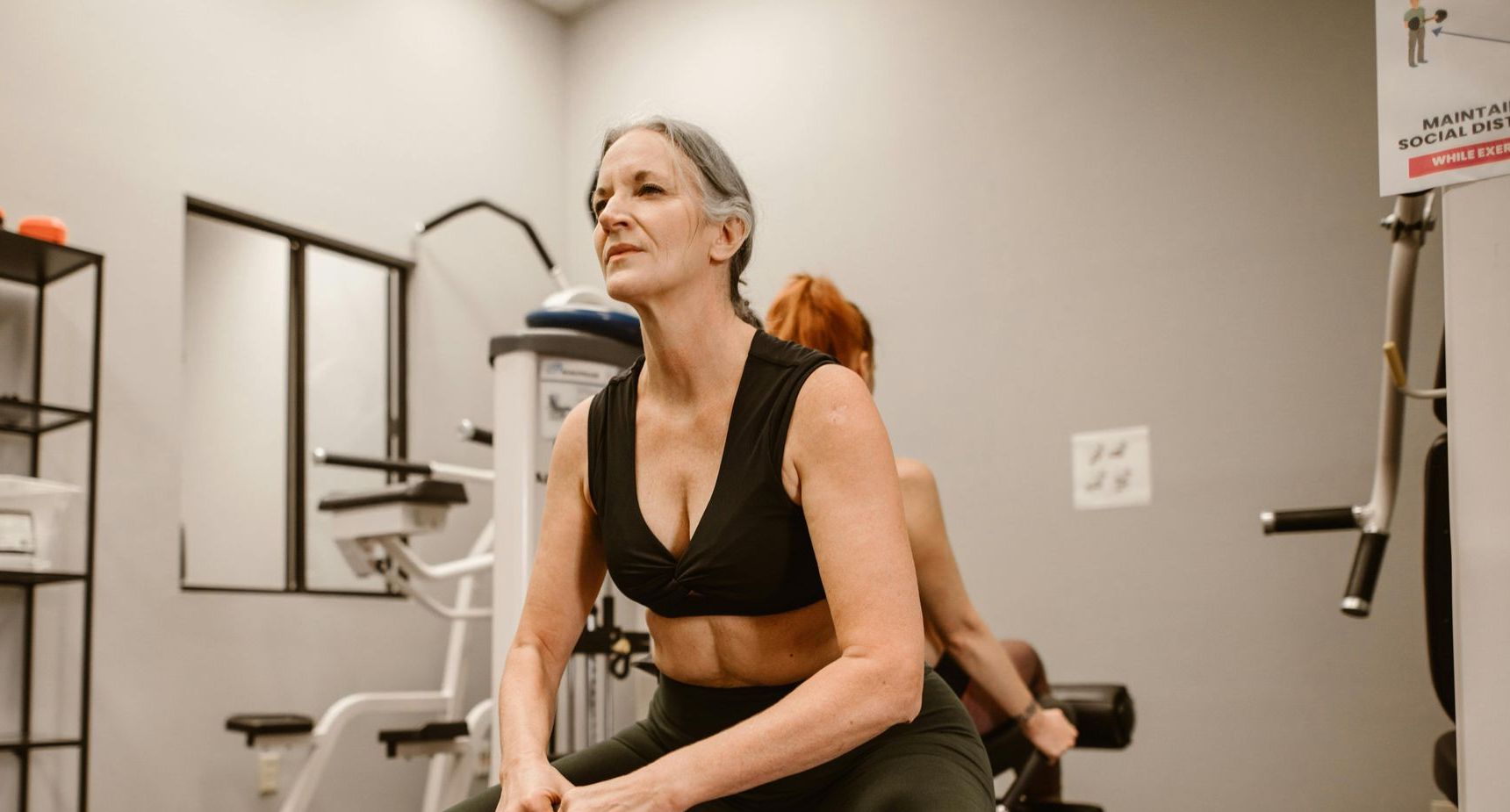
Within the Exercise Medicine Healthspan Program we assess strength on force plates and with dynamometry, the same category of testing technology used in elite sport. A short set of tasks produces objective numbers rather than impressions.
- Peak force How much force you can generate.
- Rate of force development How quickly you can generate it, which is what matters when you stumble.
- Left to right balance Whether one side is doing more of the work, which is difficult to notice from the inside.
- Grip strength Measured with a hand held dynamometer, and the marker the cohort evidence above is built on.

A force trace is more honest than a mirror. It shows asymmetries and deficits that feel normal because you have been compensating for them for years.
Strength responds to training, at any age
The reason this measurement earns its place is that the number moves. Strength is not fixed by age or genetics. In its position statement on resistance training for older adults, the National Strength and Conditioning Association concluded that well designed resistance training improves muscular strength, muscle mass, physical function, and the management of several chronic conditions in older adults ( Fragala and colleagues, 2019).
A baseline test therefore does two things. It tells you where you stand today, and it gives you something specific to train towards and measure against later.
How strength testing fits the wider assessment
Read in isolation, a strength result is interesting. Read in context, it is useful. Within the assessment, strength testing sits alongside DEXA body composition, cardiorespiratory fitness testing, and a comprehensive blood panel. Lean mass on a DEXA scan reads differently next to what that muscle can actually do. A strength deficit reads differently next to metabolic markers.

This reflects how we work: measure first, then act on the data. Your exercise physiologist turns the result into a prescription built for your body, not a template.
What the result does and does not tell you
A strength test quantifies force, symmetry, and how they compare with your age band, and it flags where attention is worth directing. It does not diagnose disease on its own, and it should never be read apart from your history and the rest of your assessment. Interpretation is individual, done with a clinician, against your age and your goals.
A strength test is a measurement, not a verdict.
References
- Leong DP, Teo KK, Rangarajan S, and colleagues Prognostic value of grip strength: findings from the Prospective Urban Rural Epidemiology (PURE) study. The Lancet. 2015;386(9990):266 to 273. https://doi.org/10.1016/S0140-6736(14)62000-6
- Celis-Morales CA, Welsh P, Lyall DM, and colleagues Associations of grip strength with cardiovascular, respiratory, and cancer outcomes and all cause mortality: prospective cohort study of half a million UK Biobank participants. The BMJ. 2018;361:k1651. https://doi.org/10.1136/bmj.k1651
- Fragala MS, Cadore EL, Dorgo S, and colleagues Resistance training for older adults: position statement from the National Strength and Conditioning Association. Journal of Strength and Conditioning Research. 2019;33(8):2019 to 2052. https://doi.org/10.1519/JSC.0000000000003230